
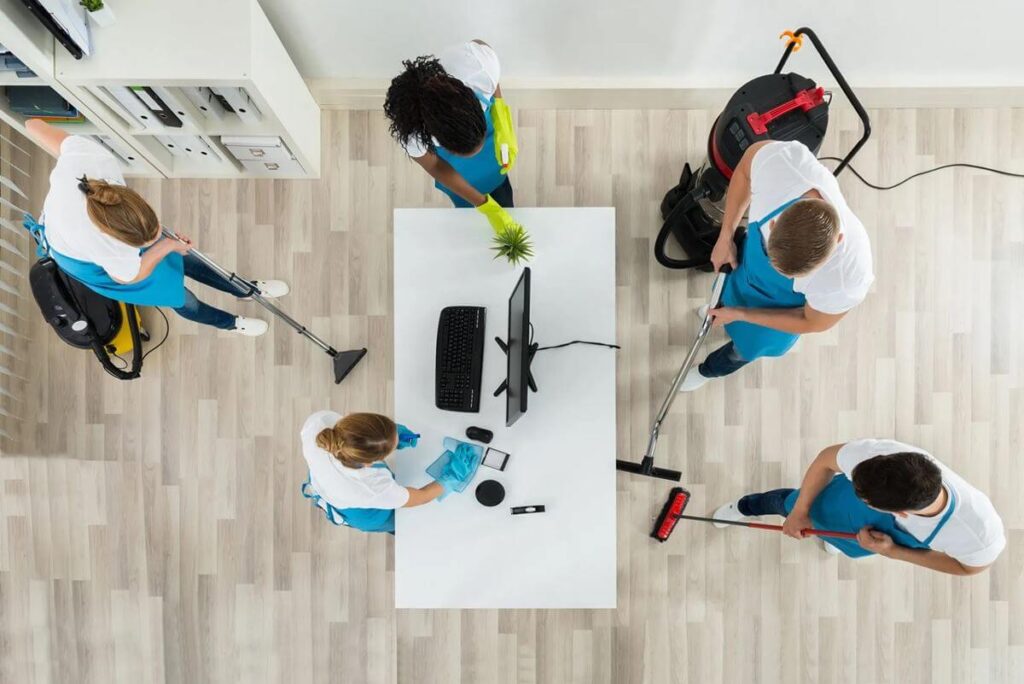
So what is the difference between domestic cleaning and commercial cleaning? Domestic cleaning is for houses, involving lightweight tasks such as dusting, mopping, and kitchen and bathroom care. Commercial cleaning is geared towards offices, stores, and locations with more foot traffic, stringent hygiene protocols, and larger floor space. It frequently requires trained personnel, industrial machines, and adherence to health codes. To demystify price, timeframes, and outcomes, the second section analyses techniques, equipment, and service levels.
The Core Difference: Domestic vs Commercial Cleaning
Domestic cleaning is for private homes while commercial cleaning caters to workplaces. The fundamental divide lies in space, risk and rules. Houses need comfort and regular maintenance. The Core Difference – Home vs Commercial Cleaning
1. The Environment
What’s the core difference between domestic cleaning and commercial cleaning? Rooms are personal: bedrooms with soft furnishings, kitchens with food prep areas, and bathrooms with limescale and soap scum. Its goal is neat, safe, and serene.
Commercial cleaning involves the cleaning of offices, retail units, schools, warehouses, and industrial floors. Such environments have high-traffic receptions, lifts, communal kitchens, and bathrooms that are used by hundreds. There could be server rooms, labs, stock areas, and break spaces.
Teams have to contend with mixed surfaces, access restrictions and specialised equipment on site. Think warehouse racking, spill zones and shop front glass stretched over 20 metres. A home is one type of requirement, a business site is many.
2. The Schedule
Domestic cleaning is usually weekly or fortnightly. It includes one-off deep cleans in spring or in advance of guests. Bookings flex around school runs, pets and work-from-home days.
Commercial cleaning tends to sit on strict rotas: daily, overnight, or early morning, so staff meet a fresh space at 08:00. Contracts lean on peak periods, audits, and seasonal surges. Those providers tailor timings to a site’s hours and risk, cleaning a school after lessons or a gym between closing and dawn.
3. The Equipment
At home, cleaners use a vacuum, mop, microfibre cloths, spray bottles and mild detergents. Stains, dust and grease are all the usual nemeses.
On commercial sites, teams arrive with industrial vacuum cleaners, floor scrubber-dryers, high-reach poles, steam machines and HEPA filtration. They might utilise dosed disinfectants, eco concentrates or solutions appropriate for food areas, healthcare zones or factories. Carpet extraction on one thousand square metres, window washing at height, and waste segregation along with personal protective equipment for dangers can all make the cut.
4. The Standards
Commercial cleaning complies with specific health and safety rules, method statements and site inductions. Staff are trained to achieve uniformity across site after site and inspection. Domestic services are about a clean, comfortable home led by what the client cares about most, such as allergen control or child-safe products.
The quality of cleaning at home is personal and visible. In the workplace, it is governed by policy, law, and risk.
5. The Relationship
Home services tend to foster a trusted, enduring relationship with one cleaner who is familiar with routines, pets and foibles and can adjust tasks from week to week.
Commercial cleaning runs on formal contracts, SLAs and insurance. A provider can send a team with a site supervisor, and the client has an account manager. You’ll earn more because of economies of scale, compliance and unsocial hours. Services can package carpet care, high-level glass and office maintenance. Domestic cleaning remains general and clean. Commercial cleaning protects the well-being of staff and visitors.
What Domestic Cleaning Involves
Domestic cleaning covers routine help that keeps a home liveable: general tidying, dusting, vacuuming, mopping, wiping surfaces, and laundry. It covers deep cleaning, like spring cleans and end-of-tenancy jobs, when ovens, windows, and carpets get a full reset. Services can focus on single rooms (kitchen degrease, bathroom scrub, bedroom refresh) and scale up from a studio flat to a busy family home. Most households tend to book weekly or fortnightly visits, but frequency varies according to needs, budgets, and cleaning standards. Daytime slots are the norm, with flexible arrangements and non-corrosive solutions to keep humans, pets, and finishes safe.
Personal Spaces
Bedrooms, sitting rooms, kitchens and bathrooms lie at the core of domestic work. Each space has its own rhythm: crumbs under the high chair, steam on the bathroom mirror, pet hair on the sofa, fingerprints on the fridge door. The objective is a healthy, tidy and pleasant house, one where surfaces are wipeable, air is fragrant and floors are clean.
Privacy concerns Cleaners don’t touch your belongings without your permission, treat paperwork with respect and leave money and valuables alone. Little courtesies, such as closing cupboard doors and banishing trailing wires, cultivate trust.
A house checklist is a useful thing. Break it down by room: in the kitchen, wipe the hob, descale the sink, and clear crumbs from drawers. In bathrooms, scrub the grouting, disinfect the taps, and polish the glass. In living rooms, dust high to low and vacuum beneath the sofas. In bedrooms, strip the beds and remove bedside clutter. Tick off deep jobs, such as oven or window cleaning, as intermittent extras.
How often? Some households require a weekly reset, others get by on a fortnightly sweep and a seasonal deep clean.
Typical Tasks
Dusting available surfaces, mopping hard floors, vacuuming carpets and rugs, wiping worktops and tables, disinfecting high-touch points and taking out bins are among the main duties.
Extras delivered on request. Oven cleans, inside window cleans, laundry and bed changes, fridge clears or spot carpet cleans fit busy weeks or pre-event touch ups.
Consistent visits with a standard checklist assist new cleaners in replicating the average standard and ensure the little tasks do not fall through the cracks.
Cycle-book jobs. Weekly for bathrooms and kitchen surfaces. Fortnightly for skirting boards. Monthly for internal windows. Seasonal for oven, curtains, and full carpet clean.
Client Focus
Domestic services begin with the homeowner’s routine. Tastes dictate product preference, room sequence and what to pass on. Plans flex for pets, allergies, naps or work-from-home calls and may change with the school term or guest visits.
Most companies provide a dedicated cleaner. Known faces become familiar with the home’s quirks, which accelerates work and cultivates trust.
Stay feedback-friendly and simple. Share what worked, flag misses early and adapt the checklist. Good communication keeps the service flowing and the house balanced out.
What Commercial Cleaning Involves
Offices, retail spaces, warehouses, healthcare centres, schools and industrial units are all included in the commercial cleaning bracket. It helps with larger spaces and more elaborate sites than domestic work, frequently with specialist tasks such as carpet cleaning, window cleaning, washroom management, and floor treatment. It needs to comply with health, safety and hygiene regulations and is usually carried out on a daily basis to ensure the safety of employees and visitors. Much is done overnight, late at night or early morning, with specialist kit and products. The majority of companies create tailored packages that suit each business, from weekly or bi-weekly schedules to one-off deep cleans.
Business Premises
Prime locations are office buildings, retail units, factories and hospitality venues. Each has its own traffic patterns, risk points and service windows. A shop requires pristine front-of-house glass. A factory requires safe floors that are free of oil and dust. A hotel requires rapid room turnover and immaculate public areas.
Cleaners service breakout areas, staff kitchens, toilets, reception, meeting areas, stairs, lifts and an office floor. Regular activities include vacuuming, mopping, wiping desks, disinfecting high-touch points such as door handles and switches, emptying bins and restocking soap, towels and paper.
A clean office promotes health, productivity, and spirit. Fewer germs lead to fewer sick days. Clutter-free desks and pure air enable teams to think clearly. Clients see it too. A tidy entranceway means cleanliness and care.
Create a business cleaning plan. Map zones, schedule daily and weekly tasks, add monthly deep cleans and record who is responsible for what. Change for school terms, clinic visiting hours or peak hotel season.
Contractual Duties
Commercial cleaning operates on rigid contracts that dictate schedules, responsibilities, standards, access protocols and health checks. This takes guesswork out of the equation and keeps work traceable.
Contracts typically combine daily cleans, periodic deep cleans and regular maintenance. Daily cleans could involve desks, floors and washrooms. Deep cleans could include carpets, upholstery, vents, kitchens and machine areas.
Objectives outlined in service agreements clarify roles, products used, safety and security measures, waste management, and time frames. They impose performance measures linked to cleanliness and appearance.
Organise routine checks, audits and basic reports with photos or checklists. These keep quality on track and demonstrate compliance.
Business Focus
The goal is steady support to operations: safe, hygienic, ready-to-work spaces that cut risk and downtime. Clean floors mean fewer slips. Sanitised surfaces mean fewer outbreaks.
Cleaning maintains brand image and meets industry requirements, from hospitality ratings to healthcare regulations and school safeguarding checks. Services vary by sector: touchpoint disinfection in clinics, lab-safe chemicals in pharma, playground sanitising in schools, front-of-house polish in hotels.
Select a partner with industry experience, solid referrals and the right equipment for the heavy-duty work, such as autoscrubbers, HEPA vacuums and compliant disinfectants. Request flexible slots outside of business hours and options for daily, weekly, fortnightly or one-off deep cleans. Match frequency to your site type and footfall.
The Unseen Responsibilities
Behind polished floors and tidy rooms, both domestic and commercial cleaners undertake work that most of us never see. These invisible tasks make buildings secure, hygienic and lawful. They include waste disposal, infection control, safe chemical use and routine checks. Cleaning logs, inspection reports and method statements underpin hygiene compliance and reduce risk for owners, tenants and visitors.
Legal Compliance
Commercial cleaning services must follow health and safety law, COSHH rules for handling substances, and industry standards. This includes risk assessments, safe storage of chemicals in labelled containers, and methodical disinfection of high touch points such as doorknobs, railings, lift buttons, and light switches.
Domestic cleaning companies are subject to minimum legal standards. They train employees to use accepted products, dilute safely, label sprays and not ruin stone, wood or fabrics. Selecting the correct product for the material is essential. The incorrect acid or bleach can etch, stain or corrode.
On commercial sites, hazardous waste, whether clinical waste, sharps, or solvent-soaked pads, requires appropriate segregation and licensed disposal. Approved agents and contact times are noted down, and audits and compliance are the managers’ responsibility.
Routine training and internal audits ensure teams are aware. Spot checks, cleaning logs, deep-clean schedules for fridges and ovens, and appliance sanitation can keep sickness away and provide due diligence.
Insurance Cover
Commercial firms hold broad coverage for property damage, employee injury, public liability and environmental damage. It embraces incidents with auto-scrubbers, deluge from a broken hose, or a tumble by a wet patch.
Reputable domestic services insure their teams and clients’ homes. A smashed glass table, a soiled sofa while cleaning the upholstery, or a tumble down the stairs should be insured, not left to the mercy of goodwill.
Insurance safeguards both customer and supplier when the unforeseen strikes. It empowers you to book bigger, more intricate work that is labour-intensive and taxing on the body.
Always request evidence of cover and limits prior to signing a contract or booking a one-off deep clean.
Staff Training
Commercial staff are trained in specialist techniques, machinery, infection control and safe handling of chemicals. They cover huge spaces, intricate designs and jobs such as carpet extraction, floor sealing and upholstery care that require experience and equipment.
Domestic cleaners train for home needs: careful dusting and polishing to keep finishes sound, safe stove and fridge cleaning, and tactful handling of personal items. Effective clutter and storage systems boost wellbeing by reducing stress.
Beyond the Mop: A Personal View
Why Clean Spaces Change How We Feel, Think and Work In domestic and professional spaces, cleaning reduces anxiety and encourages tranquillity. It demonstrates care. Behind the polish is the artistry, pride and steady practice that powers life.
Creating Comfort
Housework makes rooms feel clean, uncomplicated and secure. Less dust, fewer random piles and clean floors lead to fewer daily frictions. It keeps the house prepared for sleep and visitors, without that frenzy to clear whenever the bell goes.
For others, getting a cleaner saves stress and returns hours. Parents use those hours for bedtime stories. Carers take them for a quiet walk. Some like to clean themselves, others opt for weekly, fortnightly or monthly assistance. Both paths aim for the same outcome: peace at home.
Domestic services often begin with tasks and then incrementally add whatever life requires next. It could be a deep bathroom scrub, a carpet wash or a move-in/move-out reset. After-party cleans or spring refreshers come into play when the seasons turn or life gets busy.
Workplaces benefit from a tidy set-up too. Wiped desks, cleared bins, and clean toilets make teams feel thought of. Visitors observe. When public areas receive twice-daily cleans and offices get a weekly deep clean, staff find it easier to return to work. A clean environment enables good habits and steadier routines.
Upholding Image
‘In business, cleaning is in the brand and trust.’ Floors without streaks, glass without smears, and tidy reception desks send a quiet message: we run a tight ship. This is felt by clients, customers, and stakeholders before a word is spoken.
I’ve watched deals kick off better in smart boardrooms. The floor establishes atmosphere. It has an appreciation of time and detail. Housework has the same potency. New kitchens, clean carpets, tidy hallways all enhance a home’s appearance and can, over time, underpin its value.
High standards hold when visits are planned and routine. Some sites require daily cleans, while others benefit from weekly or monthly rounds. In commercial environments, crews adhere to health and safety policies, record jobs and log checks. Consistency establishes a firm, visible reputation.
The Human Impact
Why Cleaners are Public Health, Safety and Comfort. They kill germs on touchpoints, prevent spills turning into slip hazards and make shared spaces functional for everyone. Their magic is hushed but it alters how the days run.
Decent pay, safe kits, and explicit respect count. When teams are trained, supported, and treated well, results follow. It’s more than mop and bucket. Cleaning staff face regulatory obligations. It is simply fair to give them the time and equipment to comply.
This work supports local jobs and skills. From little family operations to bigger gangs, cleaners are creating local economies and raising standards of life and work. A tidy space promotes health and productivity, and that advantage multiplies.
Choosing The Right Service
Choosing between domestic and commercial cleaning comes down to the size and type of space, your expectations, budget, and how often cleaning is needed. A one-bed flat or a three-bed house doesn’t require the same timetable or equipment as a busy office or clinic. Regular or fortnightly cleans maintain a peaceful, clean home. Commercial cleaning typically operates on a daily basis to safeguard health and safety on-site, with offices cleaned a minimum of three times weekly due to high usage.
Assess your needs, environment, and budget
First, your space measures in square metres. Note rooms and list high-touch points such as handles, lift buttons, kitchen worktops, and so on. Think about footfall: a hallway in a family home used by two adults and a child needs less than a reception that greets 150 visitors each day. Set a budget that suits your tempo. Home cleaners will generally cost less per hour and the work can be more casual, like a two-hour tidy and wipe down in a three-bedroom house every week. Commercial services are pricier per hour and can work out of hours, early morning or late night, to avoid disruption which impacts pricing. Decide what “good” looks like: spotless floors, sanitised desks, or a tidy lounge that feels lived-in but clean.
Compare providers on experience, insurance, services, and reviews
Ensure the company has experience of your type of site. A provider that excels in schools or gyms may not be appropriate for a private flat, and the opposite is true too. Request guarantees of insurance cover, health and safety training and background checks. Review the service range: commercial teams often offer deep cleans, carpet care and floor scrubbing with machine tools. Domestic services may centre on regular upkeep, laundry help and kitchen and bathroom care. Scan recent reviews and watch trends such as skipped areas, blowout times or strong QC. Shortlist two or three companies and compare like-for-like quotes.
Request a personalised plan or service agreement
Request a programme that details tasks, frequency, products and checklists. For a home, it could be weekly dusting and hoovering, bathroom wiping and monthly oven cleaning. Daily bin collections, desk disinfection and kitchen sanitising, and a quarterly deep clean for an office should be included. Establish and confirm who provides materials, which areas are pivotal and what will occur in the event of standards dipping. An explicit agreement aligns both sides.
To make a clean break, home clean and work clean have distinct purposes. Houses need love, trust and consistent maintenance. Places such as shops, clinics or schools require rigid procedures, inspections and narrow timeframes. Think of an apartment that requires a weekly wipe, a quick oven clean and dusting the blinds. Now imagine a cafe needing food-safe floors, daily bin runs and a post-close deep clean of vents. Identical tools at first glance, but not the same work.
To find the right one, outline your requirements, establish your budget, and ask for proof of competence. Request a transparent plan and a ‘test clean’. Got a space in mind? Give us a few details and receive a quote that suits.
Frequently Asked Questions
What is the main difference between domestic and commercial cleaning?
Domestic cleaning involves homes, with regular household tasks. Commercial cleaning caters to offices and public places, frequently with greater square footage, specific equipment, and demanding regulations. What is the difference between domestic and commercial cleaning?
Do commercial cleaners use different products and equipment?
Yes. Commercial cleaners frequently use industrial machines, more robust disinfectants and expert tools. These cope with heavy use, different surfaces and regulatory requirements. Domestic cleaning generally employs lighter products for homes.
How often should I book domestic vs commercial cleaning?
Domestic cleaning tends to be weekly or fortnightly. Commercial cleaning would typically be serviced during the day, night or business hours. How often it occurs depends on footfall, legislation and standards of hygiene.
Are cleaners trained differently for commercial work?
Often, yes. Commercial cleaners receive training in health and safety, risk assessments, COSHH, and site-specific protocols. They may hold certifications. Domestic cleaners focus on home care, routines, and client preferences.
What tasks are included in domestic cleaning?
Common jobs include dusting, vacuuming, mopping, cleaning bathrooms, kitchens and surfaces. Extras could be oven cleans, inside windows or laundry by request. Que es la diferencia entre limpieza domestica y limpieza comercial?
What does commercial cleaning usually cover?
Includes floors, washrooms, kitchens, bins, touchpoints, windows, carpets and regular deep cleans. Services might incorporate high-level cleaning, sanitisation and post-construction cleans. It is designed for the site.
How do I choose the right cleaning service?
Evaluate your home, budget and cleanliness expectations. Verify credentials, insurance, reviews and training. Ask for a site visit and a detailed scope of work. Consider availability, price transparency and flexibility.