Good office hygiene comes down to cleaning the surfaces people share most, such as keyboards, phones, door handles, kitchen taps and washroom fittings, plus a few simple habits at each desk. Keyboards and phones are rarely on a standard cleaning list, so they need adding to the specification. This guide gives six desk habits and the hygiene points to include in your office cleaning plan.
Office hygiene at a glance
Office hygiene means keeping shared surfaces, kitchens and washrooms clean enough that germs do not pass easily between colleagues. It depends on two things working together: good habits from staff, and a cleaning routine that covers the high-touch points people forget, such as keyboards, phones and door handles.
- Which surfaces matter most?
- The ones many people touch: door handles, light switches, kettle and fridge handles, lift buttons, shared desks, keyboards and phones.
- How should keyboards be cleaned?
- Switch the device off or unplug it, turn it over to shake out crumbs, then wipe the keys with a product the manufacturer allows. Never spray liquid straight onto electronics.
- What helps most in the kitchen?
- Washing cups properly, wiping worktops after use, cleaning fridge and kettle handles, and replacing cloths and sponges regularly.
- What should we do when someone goes home ill?
- Wipe their desk, keyboard, mouse and phone with a suitable disinfectant before anyone else uses them, and clean the shared touch points nearby.
- Can a cleaning company help?
- Yes. High-touch points can be written into your cleaning specification so they are cleaned on every visit, not only when someone remembers.
Under the Workplace (Health, Safety and Welfare) Regulations 1992, workplaces, furniture and fittings must be kept sufficiently clean. Our office cleaning teams can build office hygiene tasks into your schedule, and our sanitising, fogging and misting service suits a deeper disinfection.
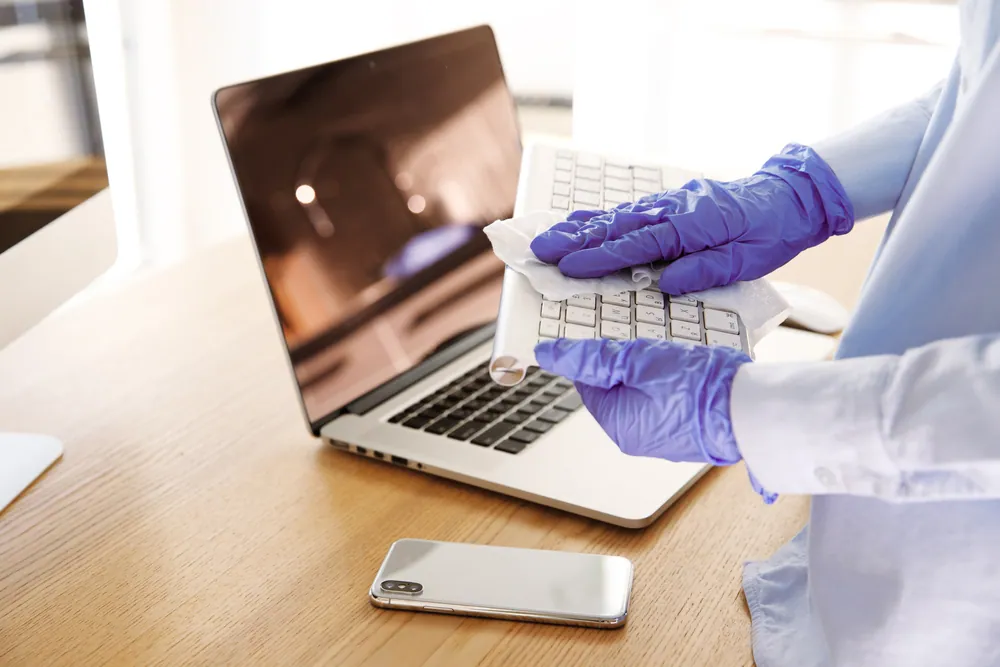
Well, this is not a myth! According to the Huffington Post, your laptop keyboard is likely 20,000 times dirtier.
When you think about it, however, that statistic isn’t as surprising as it sounds. For one thing, people tend to eat at their keyboards – especially in hardworking offices with tight deadlines. Whilst, toilet seats – especially office toilet seats – tend to get cleaned quite often, cleaning a keyboard is a difficult and time consuming task.
That being said, office hygiene is nonetheless a serious topic and not one that should be shrugged off lightly. That’s why today, we’ll be taking a look at three lesser known statistics about office hygiene that will have you reaching for the disinfectant in no time.
Viruses Can Live On Surfaces For Up To 24 Hours
That’s right. Even if your sick coworker has gone home, neither you nor your coworkers are out of the clear yet. Before sitting down at their desk to take a look through what needs to be done while they’re away, it’s vitally important that you disinfect everything that may have come into contact with a coworker who’s gone home ill.
It might seem like overkill, but the reality is that this is exactly how nasty workplace viruses get passed around. So if you want to keep things up and running while your colleague is away, make sure to be careful when picking up their phone.
Germs From The Bathroom Can Make Their Way Into Your Cup Of Tea
Yes, according to a study from Liverpool’s School of Tropical Medicine, germs from the bathroom often find their way far into the office – even making their way into food and drink. More often than not, this happens as a result of workers failing to wash their hands thoroughly. Whatever the reason, it’s a strong incentive to skip that extra cup of tea or, at very least, wash the cup out twice.
Most Office Workers Don’t Raise Hygiene Complaints Even When They Should
Last, but certainly not least, according to research from the Office Space Cleaning Facilities Management firm, 59% of workers fail to raise office hygiene complaints, even when there’s a serious problem taking place. As a result, unhygienic practices are often allowed to slide, ultimately leading to sick days and a loss in productivity.
6 easy office hygiene steps for every desk
The habits below cost nothing and make the biggest difference to office hygiene between cleaning visits.
- Wash hands properly. Use soap and water after the toilet, before eating and after handling shared items. Keep hand sanitiser by entrances and in meeting rooms for when a sink is not close by.
- Clear the desk at the end of the day. A clear desk lets cleaners wipe the whole surface instead of working around papers and mugs.
- Wipe your own keyboard, mouse and phone. Switch off or unplug first, use a wipe the manufacturer allows and keep liquid away from the electronics.
- Eat away from your desk. Crumbs and spills in a keyboard are hard to remove and give germs somewhere to live.
- Wash your cup properly. Use hot water and washing-up liquid, or the dishwasher, rather than a quick rinse.
- Speak up. If a washroom runs out of soap or the kitchen is not being cleaned, report it so it can be fixed. Problems that nobody mentions tend to stay.
Office hygiene points to add to your cleaning specification
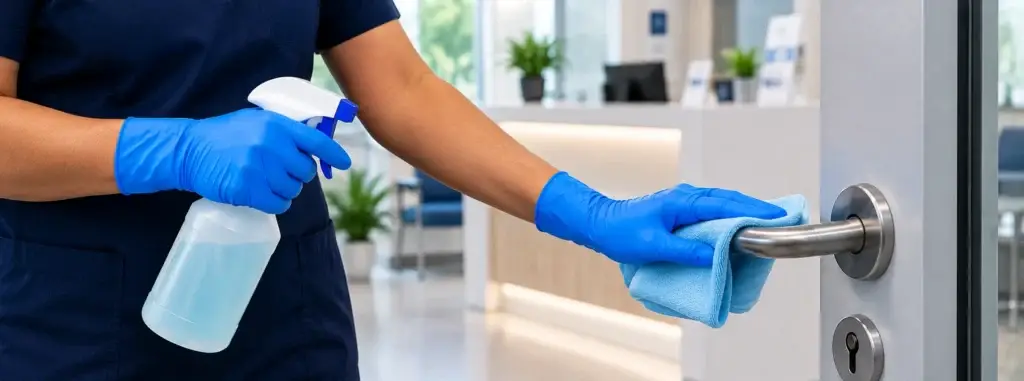
Staff habits only go so far. Good office hygiene also needs the cleaning specification to name the surfaces that matter, so they are cleaned on every visit:
- Door handles, push plates and light switches
- Lift buttons and stair handrails
- Kettle, fridge, microwave and tap handles in the kitchen
- Shared desks, meeting tables and hot desks
- Shared phones, printers and photocopier buttons
- Washroom taps, flush handles, soap dispensers and hand dryers
Ask your cleaning company to use separate colour-coded cloths for washrooms and kitchens, so cloths used in toilets never touch a worktop. Tell them which days are busiest, and agree how empty soap and paper dispensers are reported and refilled.
When to bring in professional cleaners
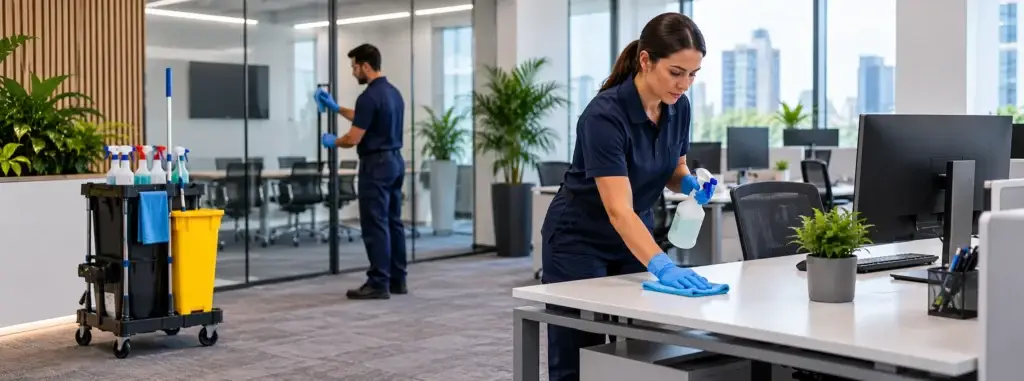
If office hygiene problems keep coming back, look at the cleaning specification before blaming staff. A written specification agreed after a site survey sets out every area, task and frequency, and regular inspections by a manager check that it is followed. DNA Cleaning Solutions supplies the equipment and products, and our cleaners are trained to use them safely.
See our office cleaning service, or contact us for a free quote.