
Cleaning is crucial in a medical centre because shared surfaces in waiting rooms, consulting rooms and washrooms can spread infection between patients and staff. Good hygiene depends on a written cleaning specification, colour-coded equipment to prevent cross-contamination, disinfectants suited to clinical areas and regular checks. This guide explains why each matters and what to expect from a professional cleaning team.
Medical centre hygiene at a glance
Professional medical centre cleaning is planned, documented cleaning of a healthcare building by trained cleaners who use colour-coded equipment and disinfectants suited to clinical settings. This guide is for practice managers and clinic owners who want to understand what good professional medical centre cleaning looks like before they review or appoint a contractor.
- Why does colour coding matter?
- It stops the same cloth or mop moving between a toilet, a kitchen and a consulting room. Each area has its own colour, which limits cross-contamination.
- Who cleans clinical equipment?
- That should be written down. A cleaning contractor normally cleans non-clinical surfaces, and the practice decides who is responsible for clinical items.
- When should cleaning take place?
- Around surgery hours. Professional medical centre cleaning is scheduled so rooms are ready before the first patient and cleaners are not working around appointments.
- What should a cleaning specification show?
- Each room or area, the tasks carried out, how often, and who checks the work. It should be agreed with the practice manager in writing.
- Does the contractor need insurance?
- Yes. Ask to see public liability and employers’ liability insurance before work starts.
Practices registered with the CQC must keep premises and equipment clean under CQC Regulation 15 (premises and equipment), so it pays to know what your cleaning records show. If you want a contractor for professional medical centre cleaning rather than general guidance, see our medical centre cleaning service or our CQC compliant medical cleaning page.
From GP surgeries and private clinics to dental practices and healthcare centres, maintaining a properly sanitised environment is essential not only for appearance but also for infection prevention, patient confidence, and regulatory compliance.
At DNA Cleaning Solutions, we understand that healthcare environments require a specialist approach to cleaning. Our ability to understand our clients’ needs has been the foundation of our success and the reason many businesses continue to trust our services. We invest heavily in staff training programmes to ensure health and safety protocols are consistently adhered to while delivering reliable, high-quality cleaning services tailored to medical environments.
In this article, we explore why professional medical centre cleaning is so important, the benefits it provides, and why choosing an experienced cleaning company matters for healthcare facilities.
Why Is Cleaning So Important in Medical Centres?
Medical centres experience constant daily foot traffic from patients, healthcare professionals, visitors, and support staff. In these environments, germs and bacteria can spread quickly through shared surfaces, waiting areas, consultation rooms, washrooms, and treatment spaces.
Unlike ordinary workplaces, many individuals visiting healthcare settings may already have weakened immune systems or underlying health conditions. This increases the importance of maintaining strict hygiene standards throughout the facility.
Professional cleaning plays a vital role in helping reduce the spread of infections and creating safer environments for everyone using the building.
Proper medical cleaning helps remove:
- Harmful bacteria
- Viruses and pathogens
- Dust and allergens
- Bodily fluid contamination
- Cross-contamination risks
Maintaining a clean and hygienic healthcare environment is essential for protecting both patient wellbeing and staff safety.
The Role of Cleaning in Infection Prevention
Infection control is one of the most important reasons medical centres require specialist cleaning services.
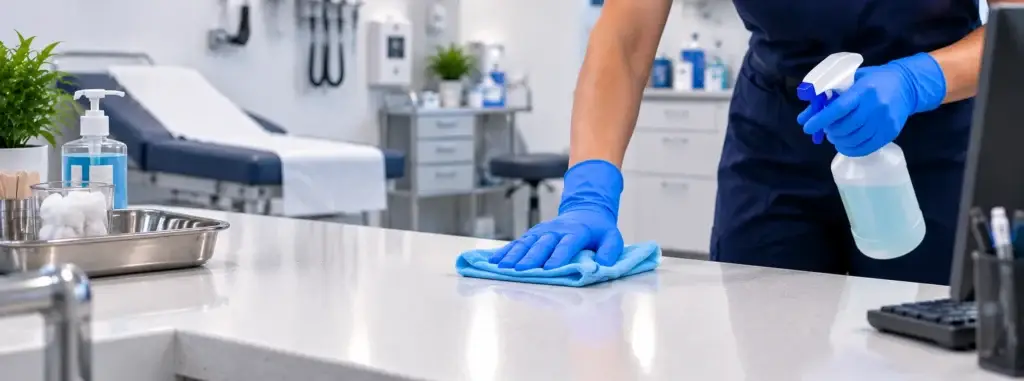
High-contact surfaces such as door handles, reception desks, chairs, medical equipment, toilets, and treatment areas can quickly become contaminated if not cleaned regularly and correctly.
Professional cleaners working within healthcare environments understand the importance of:
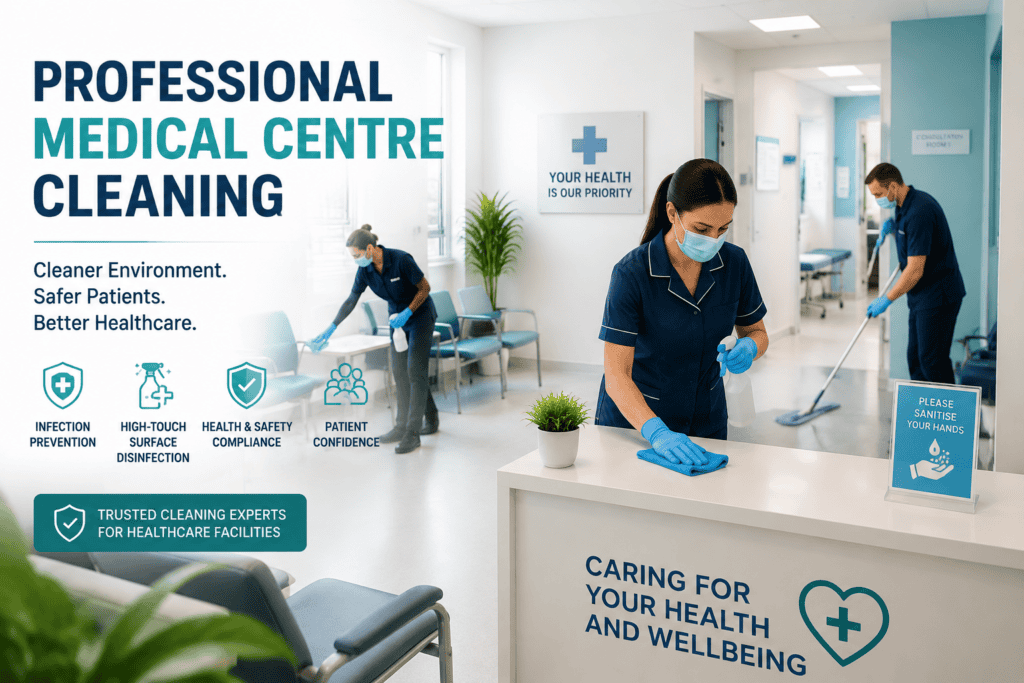
- Sanitising high-touch surfaces
- Following strict cleaning protocols
- Using appropriate disinfectants
- Preventing cross-contamination
- Adhering to health and safety standards
Routine cleaning and disinfection can significantly reduce the risk of viruses and bacteria spreading throughout the facility.
This is particularly important in environments where vulnerable patients, elderly individuals, or people with compromised immune systems may be present.
Why First Impressions Matter in Healthcare Environments
When patients walk into a medical centre, cleanliness is often one of the first things they notice.
A clean reception area, hygienic waiting room, and well-maintained treatment spaces help create reassurance and trust. Patients naturally expect healthcare environments to feel clean, safe, and professionally maintained.
On the other hand, poor hygiene standards can negatively affect patient confidence and damage the reputation of a healthcare provider.
Professional cleaning helps medical centres maintain a positive image while creating a more welcoming and comfortable environment for patients and visitors.
The Benefits of Professional Medical Centre Cleaning
Professional healthcare cleaning provides benefits far beyond general appearance.
One of the biggest advantages is improved infection control and reduced contamination risks. Consistent cleaning routines help minimise the spread of harmful bacteria and viruses, supporting safer healthcare environments for both patients and staff.
A professionally cleaned medical centre also contributes to better staff wellbeing and morale. Healthcare professionals work in demanding and high-pressure environments, so maintaining a clean and organised workplace can positively impact comfort and productivity.
Regular cleaning can also help preserve flooring, furniture, washrooms, and communal areas by reducing wear, stains, and long-term damage caused by heavy daily use.
Perhaps most importantly, professional cleaning supports compliance with hygiene expectations and health and safety standards within healthcare settings.
Why Medical Centre Cleaning Requires Specialist Knowledge
Cleaning healthcare environments requires far more than standard office cleaning.
Medical centres often contain sensitive equipment, clinical waste areas, treatment rooms, and high-risk zones that require specialist attention and careful sanitation procedures.
Professional healthcare cleaners must understand:
- Infection control measures
- Safe chemical handling
- COSHH regulations
- Cross-contamination prevention
- Colour-coded cleaning systems
- Health and safety procedures
At DNA Cleaning Solutions, we invest significant time and resources into staff training to ensure our cleaners have the knowledge and skills required to work safely and effectively within medical environments.
Our commitment to high standards and reliability helps ensure healthcare providers receive cleaning services they can trust.
Why Reliability Is Essential in Healthcare Cleaning
Medical centres operate on strict schedules and rely heavily on consistency. Cleaning services must be dependable, discreet, and completed to a high standard every single time.
Missed cleans or inconsistent hygiene standards can quickly create health risks and operational issues within healthcare facilities.
That is why reliability is such an important part of professional medical cleaning services.
At DNA Cleaning Solutions, we make every effort to ensure our clients are satisfied with both our work and our cleaners. Understanding client requirements and delivering dependable service remains at the core of everything we do.
Health and Safety Should Never Be Compromised
Health and safety is one of the most important considerations when choosing a cleaning company for a medical centre.
Healthcare facilities need reassurance that cleaning providers follow proper procedures, use trained staff, and operate responsibly.
At DNA Cleaning Solutions, health and safety protocols are consistently prioritised across all areas of our work. For complete peace of mind, we are fully covered by public and employer’s liability insurance.
This allows our clients to feel confident that their facilities are being cleaned professionally, safely, and in accordance with high industry standards.
Areas That Require Extra Attention in Medical Centres
Certain areas within healthcare facilities require particularly careful and consistent cleaning due to higher contamination risks.
These include:
- Waiting rooms
- Reception desks
- Consultation rooms
- Washrooms
- Treatment areas
- Door handles and touchpoints
- Staff kitchens and communal areas
Professional cleaning schedules help ensure these areas remain hygienic and properly maintained throughout the day.
Choosing the Right Medical Cleaning Company
Selecting the right cleaning provider for a medical centre is an important decision.
Healthcare facilities should look for companies with experience in specialist cleaning environments, properly trained staff, strong health and safety standards, and a reputation for reliability.
Communication and flexibility are also essential. Every healthcare facility operates differently, and cleaning schedules often need to work around patient appointments and clinical operations.
A professional cleaning company should take time to understand the specific requirements of the facility and tailor services accordingly.
Frequently Asked Questions
Why is medical centre cleaning important?
Medical centre cleaning helps reduce the spread of infections, maintain hygiene standards, and create safer environments for patients, visitors, and staff.
How often should medical centres be cleaned?
Medical centres typically require daily cleaning, with high-touch surfaces and clinical areas cleaned and disinfected regularly throughout the day.
What makes healthcare cleaning different from office cleaning?
Healthcare cleaning involves stricter hygiene protocols, infection control procedures, and specialist sanitation methods designed for medical environments.
Why is infection control important in healthcare facilities?
Effective infection control helps reduce the spread of bacteria and viruses, protecting vulnerable patients and healthcare professionals.
What should medical centres look for in a cleaning company?
Medical centres should look for experienced providers with trained staff, strong health and safety procedures, proper insurance coverage, and reliable service standards.
Final Thoughts
Professional cleaning in medical centres is essential for protecting patient safety, maintaining hygiene standards, and supporting infection control.
Healthcare environments require specialist cleaning knowledge, consistent service delivery, and strict adherence to health and safety procedures. By investing in professional cleaning services, medical centres can create safer, cleaner, and more welcoming environments for patients, visitors, and staff alike.
At DNA Cleaning Solutions, we are proud to provide reliable, high-quality cleaning services tailored to healthcare and medical environments. Through ongoing staff training, strong safety standards, and a commitment to understanding our clients’ needs, we continue to deliver dependable cleaning solutions our clients can trust.
Looking for Professional Medical Centre Cleaning Services?
DNA Cleaning Solutions provides reliable and professional cleaning services tailored to medical centres, clinics, and healthcare facilities.
👉 Visit us today:
https://www.dnacleaningsolutions.co.uk/
📞 Contact our team to discuss your medical cleaning requirements and discover how we can help maintain a cleaner, safer healthcare environment.
Keeping professional medical centre cleaning inspection-ready
Good cleaning is only half the job in a healthcare setting. The other half is being able to show what was cleaned, when and by whom. These records help professional medical centre cleaning stand up to scrutiny from inspectors, patients and your own infection control lead.
- A written specification: every room type listed with its tasks and frequencies, agreed with the practice manager.
- Cleaning schedules and sign-off sheets: kept for each area, so gaps are easy to spot.
- A colour-coding chart: displayed in cleaning stores so every cleaner, including cover staff, follows the same system.
- Product information: safety data sheets and COSHH assessments for the disinfectants and products used on site.
- Responsibility list: who cleans clinical equipment, who cleans non-clinical surfaces, and who deals with spills.
- Inspection notes: records of supervisor visits and any actions taken.
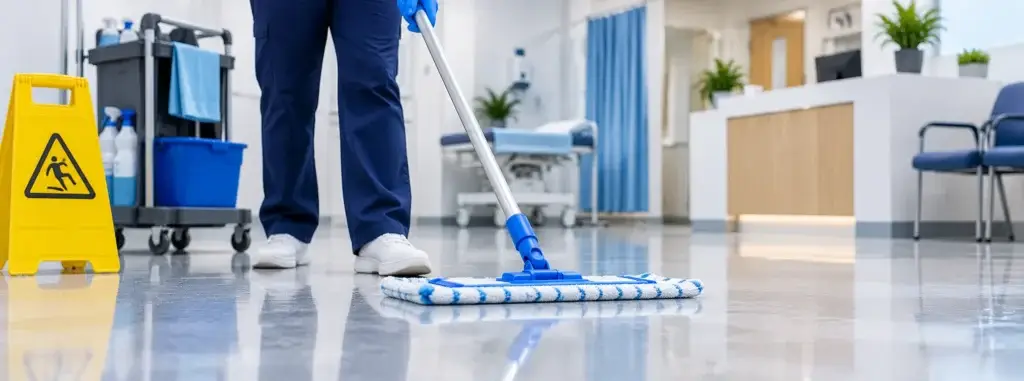
Professional medical centre cleaning should also adapt as the practice changes. A new treatment room, longer opening hours or a seasonal rise in patients may all call for a change to the schedule, so review the specification with your contractor regularly rather than once a year.
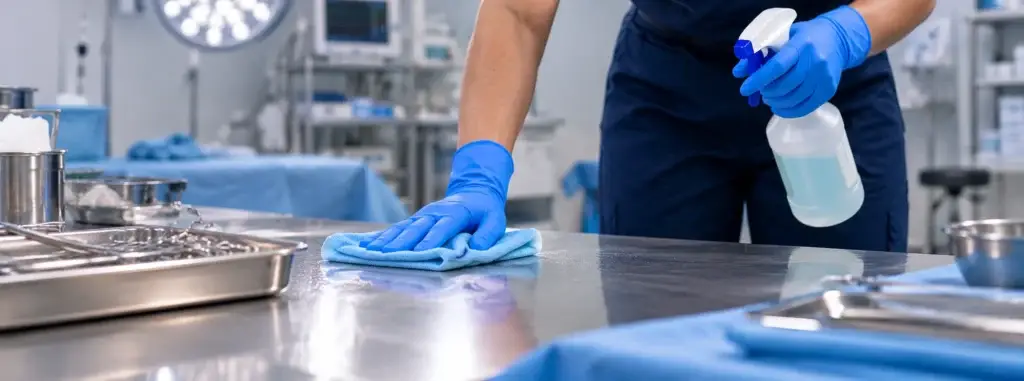
Many NHS practices also use NHS England’s National Standards of Healthcare Cleanliness to set frequencies for each room type. If your practice follows a particular standard, share it with your contractor so the specification for professional medical centre cleaning can be built around it.
In-house cleaners or a professional contractor?
Some practices employ their own cleaners; others bring in a contractor for professional medical centre cleaning. Both can work, but the responsibilities are different.
- In-house: the practice recruits and trains cleaners, buys equipment and products, writes COSHH assessments, arranges cover for sickness and holidays, and checks the work itself.
- Contractor: the cleaning company supplies trained cleaners, equipment and products, provides supervision and inspections, and works to a specification agreed with the practice.
Whichever route you choose, the practice remains responsible for the standard of its premises. Professional medical centre cleaning from a contractor should make that easier to evidence, with clear records rather than more paperwork for your team. When you compare options for professional medical centre cleaning, ask each provider to show a sample specification and explain how they check the work.