
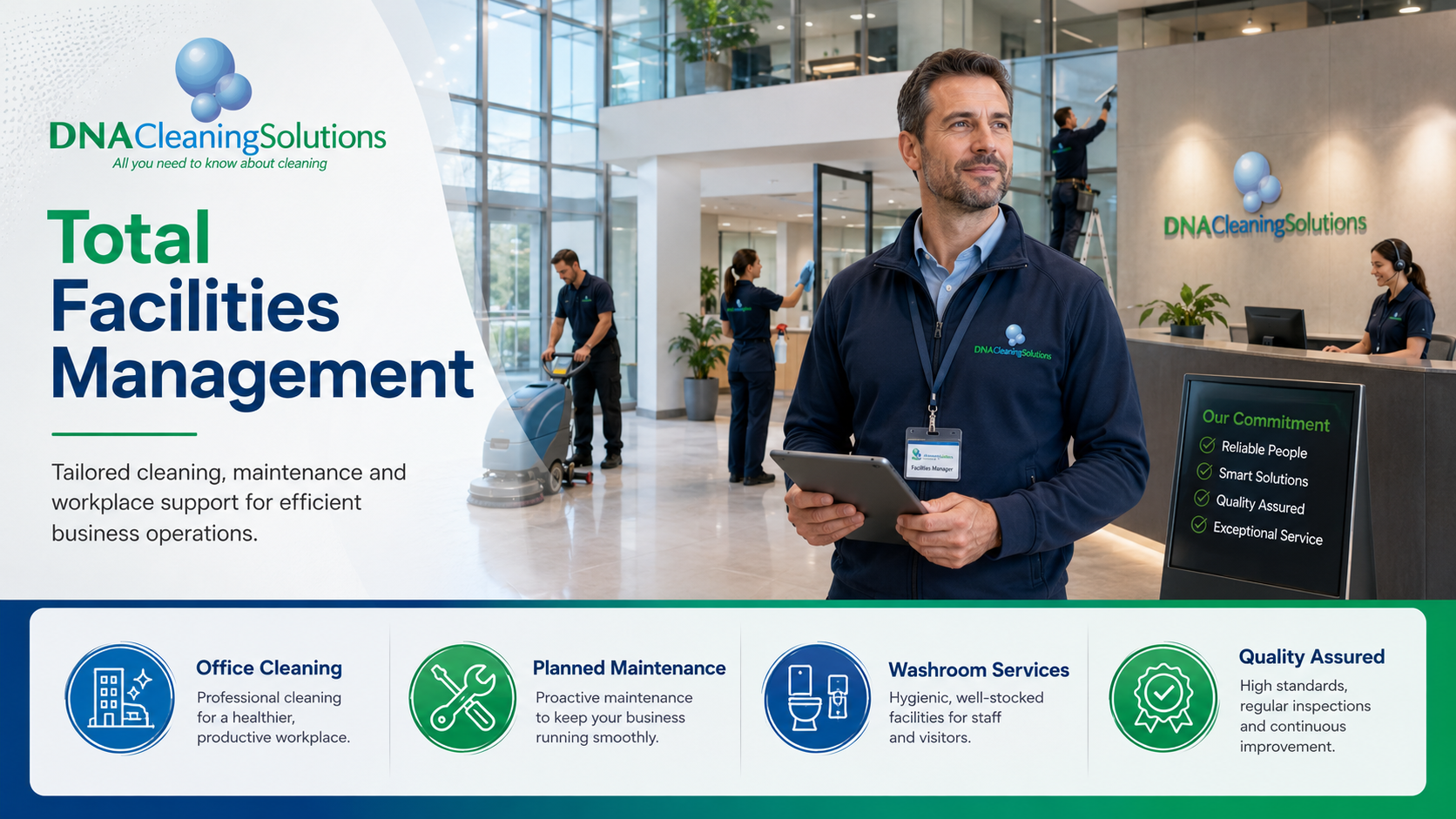
Managing a commercial building involves much more than arranging for someone to empty the bins and clean the floors.
Businesses need to consider office cleaning, washrooms, kitchens, flooring, carpets, windows, communal spaces, exterior areas, specialist cleaning and ongoing maintenance. When every requirement is handled by a different contractor, managing the workplace can quickly become complicated.
Total Facilities Management provides a more coordinated solution.
At DNA Cleaning Solutions, we provide tailored Total Facilities Management services designed around the requirements of individual businesses and commercial premises. From initial planning and routine cleaning through to specialist services, inspections and ongoing maintenance, our team can help take care of your facilities while you concentrate on running your organisation.
What Is Total Facilities Management?
Total Facilities Management, commonly shortened to TFM, is an integrated approach to managing the services required to keep a commercial property clean, functional and professionally maintained.
Instead of coordinating numerous separate cleaning and facilities contractors, a business can bring multiple services together under one managed programme.
Depending on the premises and operational requirements, this may include:
- Office cleaning
- Floor cleaning and maintenance
- Window and façade cleaning
- Carpet and upholstery cleaning
- Washroom cleaning
- Kitchen cleaning
- Deep cleaning
- High-level cleaning
- Grounds maintenance
- Internal and external cleaning
- Specialist commercial cleaning
- Planned cleaning programmes
- Quality inspections
The aim is not simply to provide more services. It is to manage those services effectively so that the building continues to operate smoothly.
Facilities Management Tailored to Your Business
Every organisation is different.
A small professional office will have very different facilities requirements from an industrial site, medical centre, school or large commercial building.
That is why DNA Cleaning Solutions takes a tailored approach.
Before establishing a cleaning and facilities programme, factors such as the following can be considered:
- Size of the premises
- Number of employees
- Number of visitors
- Business operating hours
- Type of organisation
- Areas of high footfall
- Floor and surface materials
- Washroom facilities
- Kitchen and communal areas
- Specialist cleaning requirements
- Health and safety considerations
- Frequency of cleaning required
This information allows a facilities programme to be structured around how the premises are actually used.
From Planning to Execution
Effective facilities management starts before the cleaning team arrives.
A well-managed programme requires planning, scheduling, clear responsibilities and appropriate resources.
DNA Cleaning Solutions can assess the premises and develop a cleaning plan based on the client’s requirements.
The process can include:
- Understanding the business and premises.
- Identifying cleaning and facilities requirements.
- Establishing suitable cleaning frequencies.
- Allocating trained staff and appropriate equipment.
- Planning services around business operations.
- Carrying out scheduled work.
- Inspecting the completed work.
- Reviewing requirements as the business changes.
This structured approach helps businesses maintain consistent standards rather than simply responding whenever an area becomes visibly dirty.
Office Cleaning
Regular office cleaning is one of the foundations of an effective facilities management programme.
Busy offices accumulate dust, dirt, waste and marks every day.
Depending on the workplace, regular office cleaning may cover:
- Desks and work areas
- Floors
- Reception areas
- Meeting rooms
- Kitchens
- Breakout spaces
- Communal areas
- Washrooms
- Waste collection
- Touchpoints and frequently used surfaces
The cleaning programme can be developed around the office layout, working hours and level of daily use.
Whether the premises are a small workplace or a large commercial office, the objective remains the same: maintain a consistently professional environment.
Floor Cleaning and Maintenance
Commercial flooring can experience substantial wear because of daily footfall.
Entrances, corridors, reception areas and communal spaces are particularly vulnerable to dirt, marks and gradual deterioration in appearance.
A professional floor maintenance programme can include appropriate cleaning techniques based on the flooring material.
This may involve:
- Vacuuming
- Sweeping
- Mopping
- Scrubbing
- Specialist machine cleaning
- Periodic deep cleaning
Using the correct cleaning products, equipment and techniques is important because different flooring materials have different maintenance requirements.
Planned floor cleaning can help maintain the appearance of a building while reducing the accumulation of dirt and grime.
Carpet and Upholstery Cleaning
Carpets and upholstered furniture can retain dirt that is not always removed through routine cleaning.
Office chairs, reception sofas, carpeted corridors and meeting areas can all receive significant daily use.
Professional carpet and upholstery cleaning can therefore be incorporated into a Total Facilities Management programme.
Depending on the material and condition, specialist carpet cleaning can help tackle:
- Embedded dirt
- General staining
- Marks caused by foot traffic
- Dust
- Spills
- Deterioration in appearance
Scheduling specialist cleaning periodically can help businesses maintain these assets rather than waiting until carpets and furniture appear heavily soiled.
Window and Façade Cleaning
The exterior of a commercial building is part of the organisation’s professional image.
Visitors may form an impression of a business before they even enter the premises.
Dirty windows and poorly maintained external surfaces can therefore affect the appearance of an otherwise professional workplace.
DNA Cleaning Solutions provides window and façade cleaning that can be incorporated into a wider facilities management programme.
This enables exterior cleaning to be planned rather than treated as an occasional standalone task.
Deep Cleaning
Routine cleaning maintains everyday standards, but certain areas periodically require more intensive attention.
Deep cleaning can address areas and surfaces that may not form part of everyday cleaning activities.
Depending on the premises, this may include:
- Kitchens
- Washrooms
- Floors
- Fixtures and fittings
- Hard-to-access areas
- Detailed surface cleaning
- High-use communal spaces
- Areas behind or beneath furniture and equipment
Deep cleaning can be scheduled periodically or arranged when circumstances require additional attention.
Washroom Cleaning and Maintenance
Washrooms require particularly consistent cleaning because they are used by employees and visitors throughout the working day.
A poorly maintained washroom can quickly affect perceptions of the whole organisation.
A facilities management programme can incorporate:
- Toilet cleaning
- Sink cleaning
- Floor cleaning
- Surface cleaning
- Regular deep cleaning
- General washroom maintenance
- Cleaning according to agreed schedules
The frequency required will depend largely on the number of people using the facilities and the operating hours of the premises.
Kitchen and Communal Area Cleaning
Workplace kitchens, staff rooms and breakout areas can become dirty quickly because they are shared by multiple employees.
Food preparation areas, sinks, countertops, tables and floors therefore need appropriate attention.
Including these areas within a managed cleaning programme helps ensure they are not overlooked.
A cleaner communal environment also contributes to the overall presentation and day-to-day usability of the workplace.
High-Level and Industrial Cleaning
Certain commercial and industrial premises have areas that cannot be cleaned safely or effectively using standard methods.
High-level cleaning may involve areas such as:
- Elevated surfaces
- High internal structures
- Industrial spaces
- Difficult-to-access areas
- High-level fixtures
- Specialist commercial environments
These tasks require appropriate planning, equipment, training and health and safety controls.
DNA Cleaning Solutions provides commercial and industrial cleaning services and places importance on staff training and suitable working practices.
Grounds and External Areas
Facilities management should not stop at the front door.
External and surrounding areas also contribute to the appearance and functionality of commercial premises.
Grounds maintenance and external cleaning can therefore form part of a broader facilities management programme where required.
Managing both internal and external areas through a coordinated programme can help businesses maintain more consistent standards throughout the site.
Health and Safety in Facilities Management
Commercial cleaning can involve machinery, chemicals, wet surfaces, working at height and specialist equipment.
Health and safety must therefore be incorporated into the way cleaning work is planned and carried out.
DNA Cleaning Solutions follows structured training procedures and places emphasis on ensuring that employees have the knowledge required for their work.
Personal protective equipment can also be provided where appropriate to the task and environment.
Good facilities management should consider:
- Staff training
- Safe use of equipment
- Appropriate cleaning chemicals
- Personal protective equipment
- Site-specific procedures
- Working safely around employees and visitors
- Correct cleaning methods
- Relevant workplace regulations
Proper preparation reduces unnecessary risks while allowing cleaning activities to be completed effectively.
Trained and Professional Cleaning Teams
Facilities management ultimately depends on the people delivering the service.
DNA Cleaning Solutions invests in trained cleaning staff who understand the importance of professional conduct, communication and attention to detail.
Cleaning teams should understand not only what needs to be cleaned but also how it should be cleaned.
This includes knowing:
- Which cleaning products are appropriate
- How equipment should be operated
- How different surfaces should be treated
- How to work safely
- How to minimise disruption
- How to follow site procedures
- How to identify potential cleaning issues
Consistent training helps support consistent service delivery.
Minimising Disruption to Business Operations
Facilities work should support a business, not interfere with it.
For many commercial organisations, cleaning and maintenance activities need to take place around employees, customers, production schedules or operating hours.
Cleaning programmes can therefore be planned around the requirements of the site.
The objective is to complete necessary work effectively while keeping disruption to normal business activities as low as reasonably possible.
Preventative Planning Rather Than Reactive Cleaning
Waiting for a problem to become obvious is rarely the most efficient way to manage commercial premises.
Preventative planning can help businesses identify routine cleaning and maintenance requirements in advance.
For example, instead of waiting until carpets are heavily stained, periodic carpet cleaning can be scheduled.
Rather than allowing floors to gradually deteriorate in appearance, regular floor maintenance can be planned.
The same principle can apply to windows, washrooms, kitchens and other areas.
A preventative approach makes facilities management more predictable and can help maintain more consistent standards throughout the year.
Quality Control and Final Inspections
Cleaning should not simply be considered complete because the scheduled time has ended.
Quality control helps confirm that the required standard has actually been achieved.
DNA Cleaning Solutions incorporates inspection into its approach to commercial cleaning.
A final inspection can help:
- Identify areas requiring further attention
- Confirm agreed work has been completed
- Maintain consistent standards
- Highlight recurring cleaning problems
- Provide feedback for future visits
Regular quality monitoring also allows a cleaning programme to evolve when business requirements change.
Why Combine Facilities Services?
Using separate suppliers for every cleaning requirement can create unnecessary administrative work.
A Total Facilities Management approach can provide a more straightforward solution.
Potential advantages include:
- Fewer contractors to coordinate
- Clearer accountability
- Better communication
- Consistent cleaning standards
- Coordinated schedules
- Easier quality control
- Reduced administration
- Tailored service delivery
- Greater flexibility
- One overall facilities strategy
For internal management teams, this can substantially simplify the day-to-day responsibility of keeping a commercial property maintained.
Facilities Management for Commercial and Industrial Businesses
DNA Cleaning Solutions works with commercial organisations and businesses requiring different levels of cleaning support.
Total Facilities Management may be suitable for environments including:
- Offices
- Commercial buildings
- Industrial premises
- Warehouses
- Schools and academies
- Medical centres
- Professional practices
- Factories
- Multi-site businesses
- Specialist commercial environments
Each environment has different cleaning priorities, so the service should be designed accordingly.
Why Choose DNA Cleaning Solutions?
DNA Cleaning Solutions provides professional cleaning and facilities management services with an emphasis on tailoring each programme around client requirements.
Businesses can benefit from:
- Professionally trained staff
- Tailored cleaning programmes
- Commercial and industrial cleaning experience
- Planned service delivery
- Health and safety procedures
- Modern cleaning techniques and equipment
- Regular communication
- Competitive quotations
- Quality control
- Final inspections
- A broad range of specialist cleaning services
The aim is to create a facilities management solution that supports the organisation rather than adding another management burden.
Total Facilities Management Across London and the Home Counties
DNA Cleaning Solutions provides professional cleaning services to businesses across London, Greater London and the Home Counties.
Whether your organisation requires routine commercial cleaning or a wider Total Facilities Management solution incorporating several specialist services, our team can discuss your requirements and develop an appropriate plan.
Bringing multiple services together can make facilities management easier, improve accountability and help maintain consistent standards throughout your premises.
Request a Free Facilities Management Quote
Your business should be able to focus on serving customers, supporting employees and growing the organisation rather than spending unnecessary time coordinating cleaning contractors.
A professionally managed facilities programme can take much of that responsibility away from your internal team.
Contact DNA Cleaning Solutions today to discuss your Total Facilities Management requirements and request a free quotation.
Our team can assess your premises, understand your requirements and develop a tailored cleaning and facilities programme designed around your business.